MCP Explained: What is Model Context Protocol? Complete Guide (2026)
Artificial Intelligence is evolving rapidly. Modern AI models are no longer expected to simply answer questions—they're expected to interact with business systems, retrieve live information, update databases, execute workflows, and use external tools.
However, there's one major challenge:
Every AI application traditionally required developers to build custom integrations for every tool.
Connecting an AI model to Gmail, Google Drive, Slack, GitHub, PostgreSQL, CRM software, or cloud storage often meant writing custom code for each integration.
This approach doesn't scale.
That's exactly why the Model Context Protocol (MCP) was introduced.
MCP provides a standardized way for AI models to communicate with external tools, services, databases, APIs, and applications.
Instead of creating dozens of custom integrations, developers can connect AI systems through one common protocol.
In this guide, you'll learn what MCP is, how it works, why it's important, and how it's transforming the future of AI Agents.
---
What is MCP?
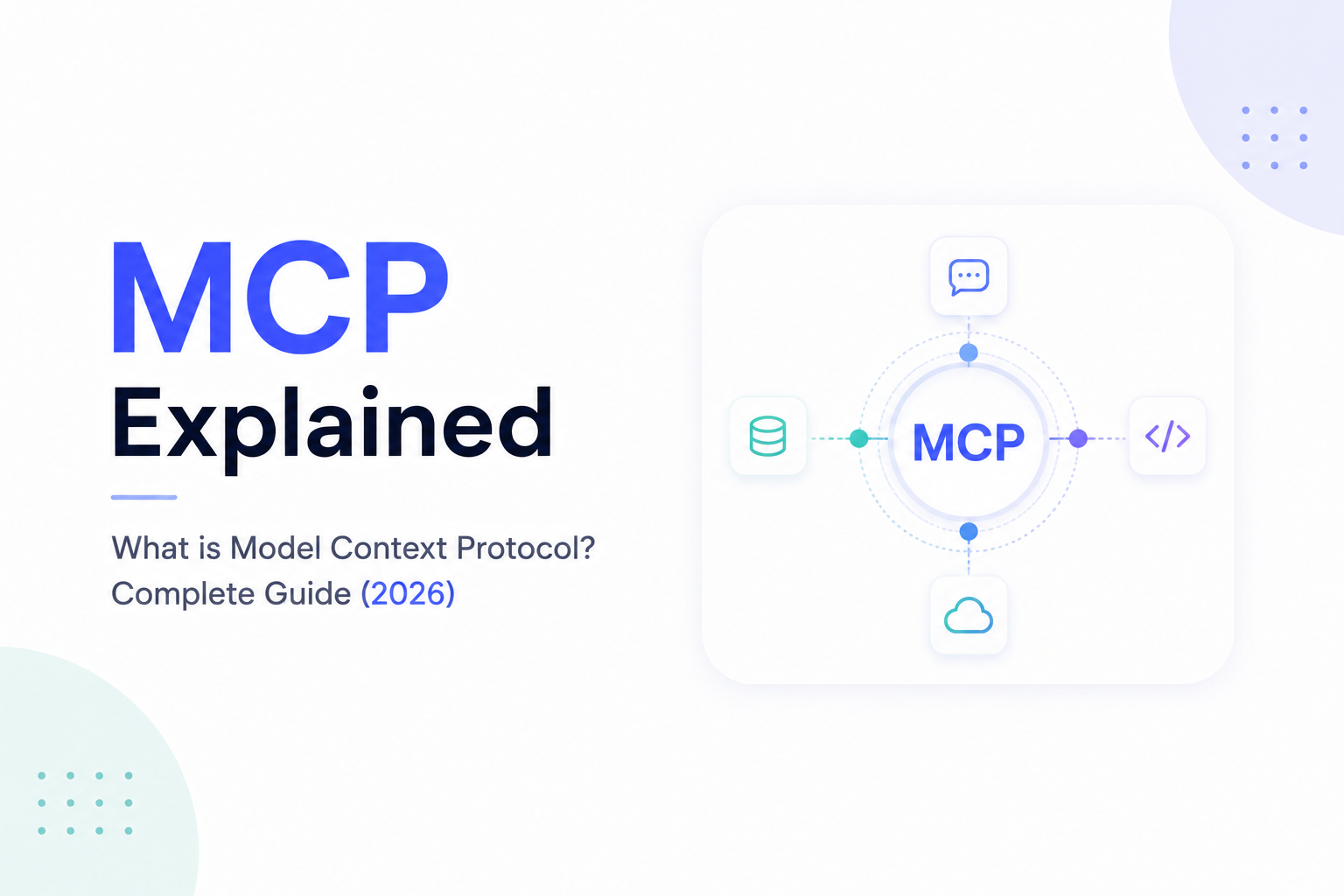
Model Context Protocol (MCP) is an open standard that allows AI models to securely communicate with external tools, applications, APIs, databases, and data sources.
Think of MCP as a USB-C port for AI.
Just as USB-C allows many devices to connect through one standard connector, MCP allows AI models to connect with many different tools through one standard protocol.
Instead of every application inventing its own AI integration, MCP creates a common language between AI and software.
---
Why Was MCP Created?
Before MCP, developers had to build custom integrations for every tool.
Example:
ChatGPT
↓
Custom Gmail API
↓
Custom Slack API
↓
Custom GitHub API
↓
Custom CRM API
↓
Custom Database API
Each integration required different authentication methods, request formats, and maintenance.
As more tools were added, the complexity increased dramatically.
MCP solves this by providing one standard interface.
---
How MCP Works
A typical MCP architecture looks like this:
User
↓
AI Assistant
↓
MCP Client
↓
MCP Server
↓
Business Tools
↓
Response Returned
The AI communicates with the MCP server instead of talking directly to every application.
The MCP server manages tool discovery, permissions, and execution.
---
Core Components of MCP
Every MCP system consists of three primary components.
---
1. AI Client
The AI Client is the application that interacts with the language model.
Examples include:
- AI Chatbots
- AI Assistants
- IDE Extensions
- AI Agents
- Voice Assistants
- Desktop Applications
The client sends requests to MCP.
---
2. MCP Server
The MCP Server acts as a bridge between AI and external systems.
Its responsibilities include:
- Discovering available tools
- Managing authentication
- Executing tool requests
- Returning structured responses
- Enforcing permissions
It exposes tools in a standardized format.
---
3. Tools and Resources
These are the external systems the AI can access.
Examples include:
- Gmail
- Slack
- GitHub
- PostgreSQL
- MongoDB
- Google Drive
- Notion
- Stripe
- Jira
- Salesforce
- Internal APIs
Instead of building separate integrations, these tools become available through MCP.
---
Why MCP Matters
Modern AI applications need more than conversation.
Businesses expect AI to:
- Read emails
- Search documents
- Update CRM records
- Create GitHub issues
- Query databases
- Schedule meetings
- Generate reports
- Manage workflows
Without MCP, each capability requires custom development.
With MCP, these capabilities become standardized.
---
MCP vs Traditional API Integration
Traditional Approach
AI
↓
Custom API
↓
Application
↓
Repeat for every tool
This creates duplicated work.
---
MCP Approach
AI
↓
MCP
↓
Multiple Applications
One protocol supports many integrations.
---
Example Workflow
Imagine a sales manager asks:
"Show me all enterprise leads created this week and send a summary to Slack."
The AI:
↓
Uses MCP
↓
Queries CRM
↓
Retrieves lead data
↓
Generates summary
↓
Posts message to Slack
↓
Confirms completion
The AI performs multiple business actions through one standardized protocol.
---
MCP for AI Agents
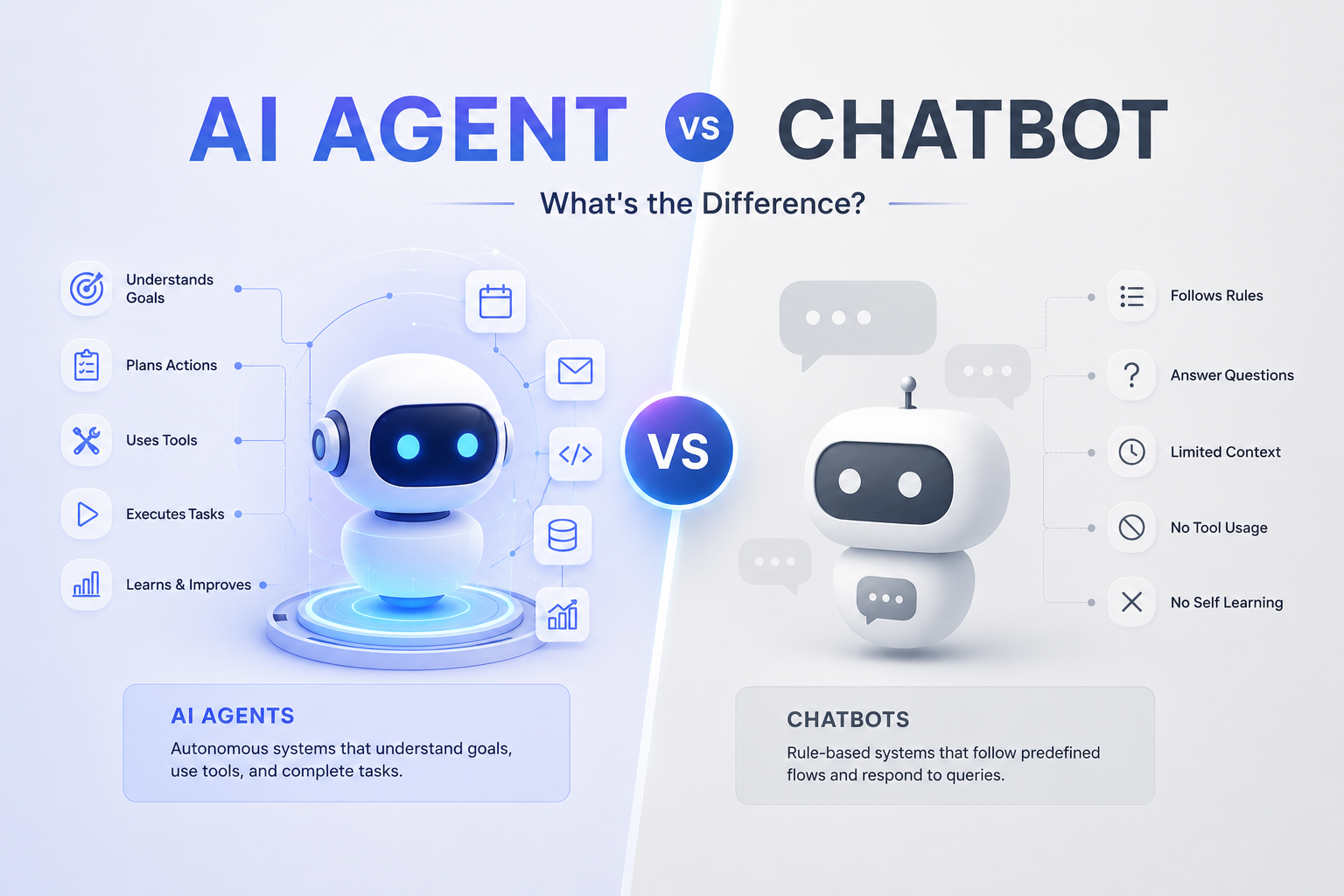
MCP is particularly valuable for AI Agents.
Instead of simply answering questions, AI Agents can:
- Access business systems
- Use external tools
- Execute workflows
- Retrieve live information
- Complete tasks autonomously
This makes AI Agents significantly more useful in real-world business environments.
---
Popular MCP Use Cases
Software Development
AI assistants can:
- Read repositories
- Create pull requests
- Open GitHub issues
- Review code
- Search documentation
---
Customer Support
AI can:
- Retrieve customer history
- Update CRM records
- Generate responses
- Create support tickets
- Escalate issues
---
Business Operations
AI can:
- Query databases
- Generate reports
- Update spreadsheets
- Schedule meetings
- Send notifications
---
HR Automation
AI can:
- Read employee records
- Schedule interviews
- Update HR systems
- Answer policy questions
---
Finance
AI can:
- Generate financial reports
- Retrieve invoices
- Process approvals
- Track expenses
---
Benefits of MCP
Organizations adopting MCP gain several advantages.
Standardized Integration
Developers write fewer custom connectors.
---
Faster Development
New tools can be integrated much more quickly.
---
Better Scalability
Applications can grow without requiring separate integrations for every service.
---
Improved Security
Permissions and authentication are managed centrally.
---
Better Maintainability
Updating one protocol is easier than maintaining dozens of custom integrations.
---
Enterprise Readiness
MCP provides a structured foundation for production AI systems.
---
MCP and RAG
MCP complements Retrieval-Augmented Generation (RAG).
Example:
User asks a question.
↓
AI retrieves documents using RAG.
↓
Needs live CRM information.
↓
Uses MCP.
↓
Combines retrieved documents with live business data.
↓
Generates an accurate answer.
This creates AI systems that use both historical knowledge and real-time business information.
---
MCP and AI Agents
A modern AI Agent may combine:
- Large Language Models
- RAG
- Vector Databases
- Workflow Automation
- MCP
- External APIs
Together, these technologies allow AI to reason, retrieve information, and perform actions across business systems.
---
Security Considerations
Because MCP provides access to business tools, security is critical.
Best practices include:
- Authenticate every request.
- Apply role-based access control.
- Restrict tool permissions.
- Encrypt communications.
- Log all actions.
- Audit sensitive operations.
- Validate user requests.
Proper security ensures AI only performs authorized actions.
---
Best Practices
When building MCP-powered applications:
- Expose only necessary tools.
- Keep tool descriptions clear.
- Validate every action.
- Handle failures gracefully.
- Limit permissions.
- Monitor usage.
- Test integrations regularly.
- Document available capabilities.
These practices improve reliability and security.
---
Future of MCP
Model Context Protocol is expected to become a foundational standard for enterprise AI.
Future developments will include:
- Smarter tool discovery
- Multi-agent collaboration
- Voice AI integration
- Enterprise workflow orchestration
- Cross-platform interoperability
- Secure AI ecosystems
- Autonomous business operations
As AI Agents become more capable, standardized communication through MCP will become increasingly important.
---
Final Thoughts
Model Context Protocol represents an important step toward making AI systems truly useful in real-world environments.
Instead of being isolated conversational models, AI can securely connect with the tools, databases, and applications businesses use every day.
For developers, MCP reduces integration complexity.
For organizations, it enables scalable, maintainable, and secure AI solutions.
If you're building AI Agents, enterprise assistants, or workflow automation systems, understanding MCP is becoming an essential skill.
---
Ready to Build MCP-Powered AI Solutions?
At WyndrelLabs, we build enterprise-grade AI Agents that integrate with business applications using modern standards such as MCP, Retrieval-Augmented Generation (RAG), workflow automation, and Large Language Models.
Whether you're connecting AI to your CRM, internal databases, developer tools, or business workflows, our team can design secure and scalable AI systems tailored to your organization.
Book a free consultation today and discover how MCP can unlock the full potential of AI for your business.