What is an AI Agent?
Artificial Intelligence has rapidly evolved over the last few years. While traditional AI tools can answer questions or generate content, modern AI systems are capable of planning, reasoning, making decisions, and completing tasks on their own. These intelligent systems are known as AI Agents.
AI Agents are transforming the way businesses operate by automating repetitive work, assisting employees, and interacting with customers without constant human supervision.
In this guide, you'll learn what AI Agents are, how they work, their architecture, real-world applications, and why they're becoming the future of business automation.
---
What is an AI Agent?
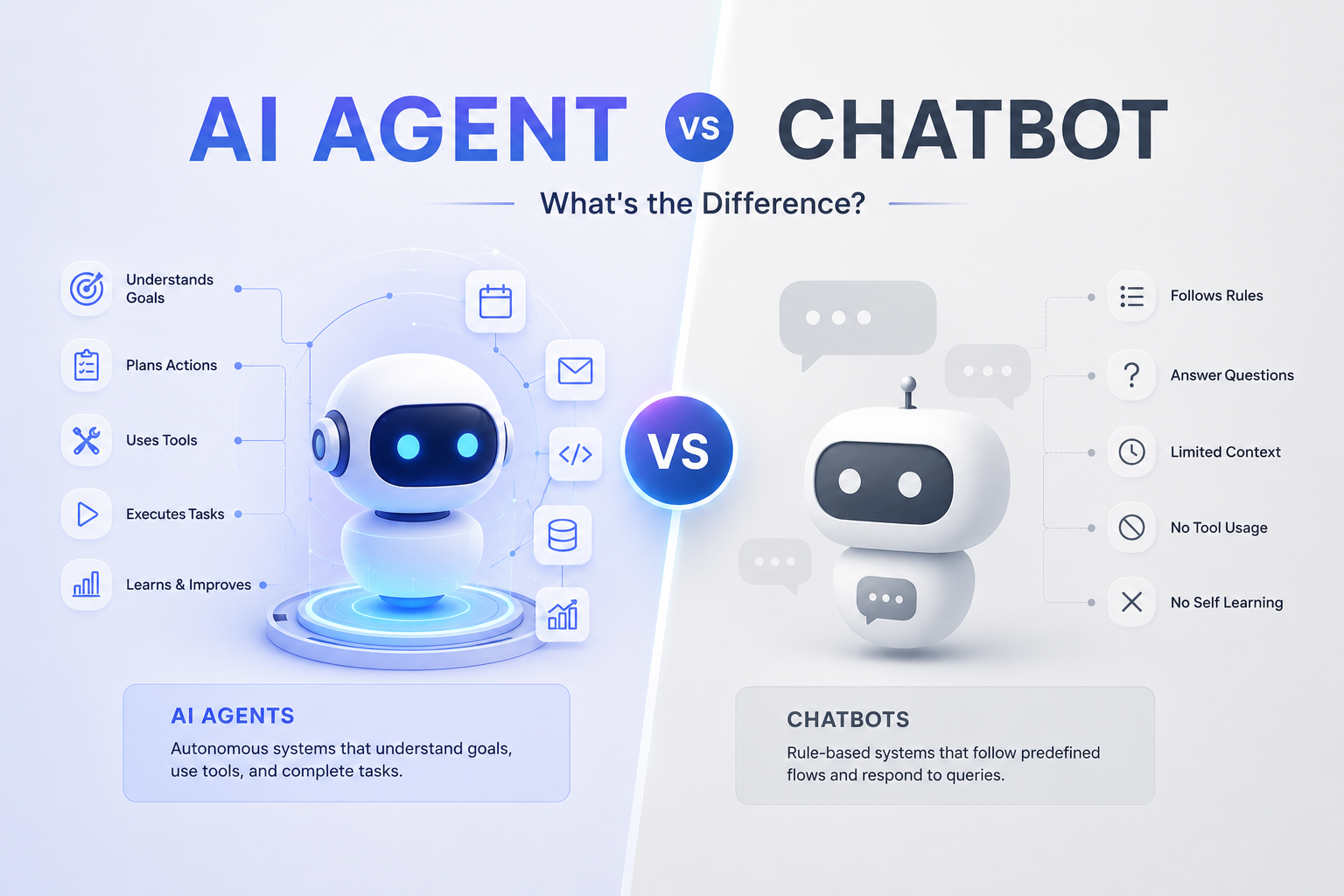
An AI Agent is an intelligent software system that can understand a goal, gather information, make decisions, and perform actions to achieve that goal with minimal human intervention.
Unlike traditional software that follows fixed rules, AI Agents can think through problems, choose the right tools, and adapt based on the situation.
For example, instead of simply answering a customer's question, an AI Agent can:
- Understand the request
- Search company data
- Check CRM records
- Update customer information
- Schedule meetings
- Send emails
- Generate reports
—all automatically.
---
How Does an AI Agent Work?
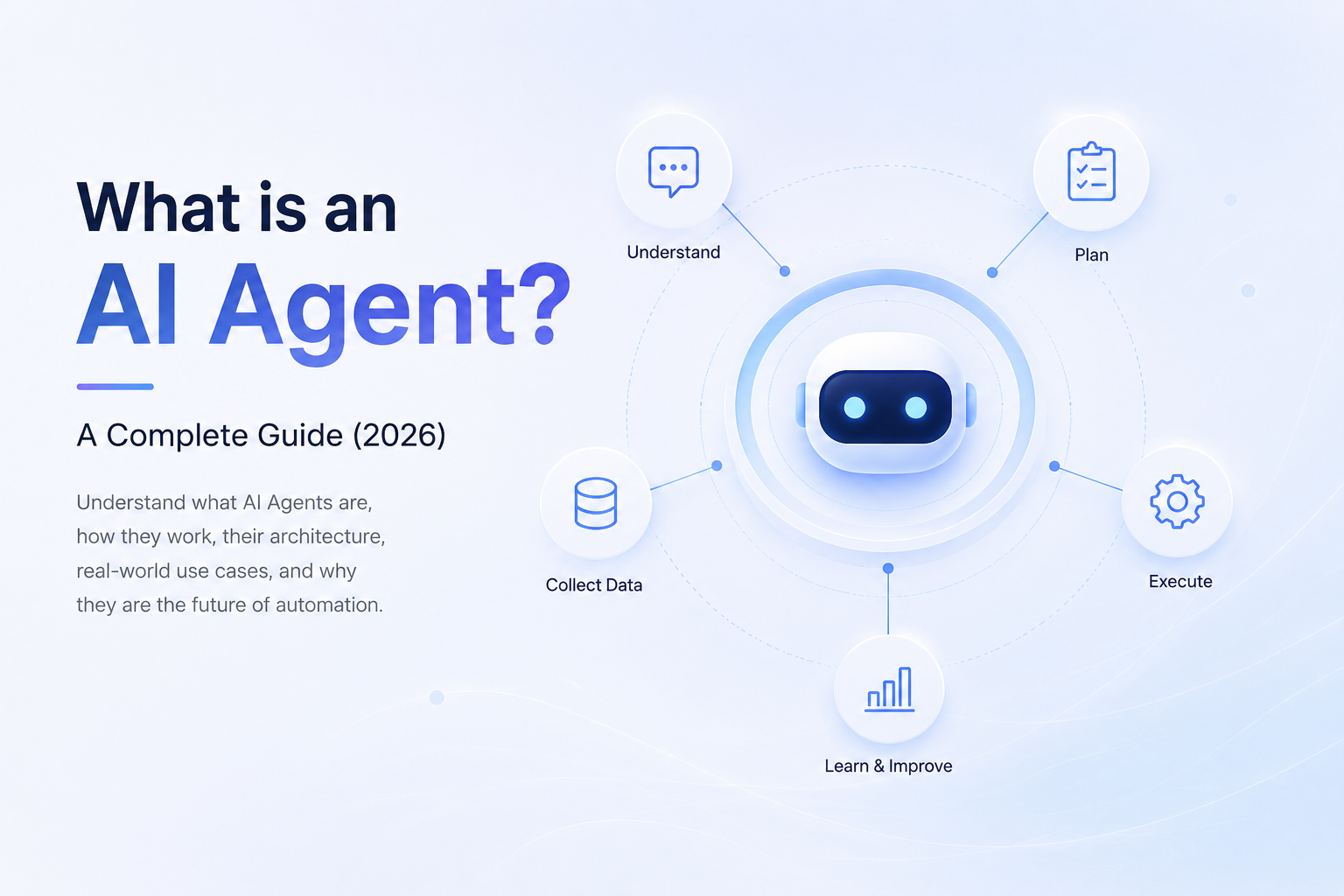
Every AI Agent generally follows five steps.
1. Observe
The AI collects information from different sources such as:
- User messages
- Documents
- Databases
- APIs
- CRM software
- Websites
---
2. Understand
Using a Large Language Model (LLM), the agent understands what the user wants.
Example:
"Book a demo for next Tuesday."
The AI identifies:
- User intent
- Preferred date
- Calendar availability
---
3. Plan
Instead of immediately responding, the AI creates a plan.
Example:
- Check calendar
- Find available slots
- Schedule meeting
- Send confirmation email
- Update CRM
---
4. Execute
The AI Agent uses external tools to perform real actions.
These tools may include:
- Gmail
- Slack
- Google Calendar
- HubSpot
- Salesforce
- Databases
- Internal APIs
---
5. Learn
Modern AI Agents remember previous conversations and continuously improve future responses.
---
Core Components of an AI Agent
A complete AI Agent consists of several components working together.
Large Language Model (LLM)
The reasoning engine that understands natural language and generates intelligent responses.
Popular LLMs include:
- OpenAI GPT
- Claude
- Gemini
- Llama
---
Memory
Memory allows the agent to remember conversations and previous actions.
Types include:
- Short-term Memory
- Long-term Memory
- Vector Database Memory
---
Tools
Tools enable the AI to interact with external systems.
Examples include:
- Calendar
- Search Engines
- CRM
- Databases
- Payment APIs
---
Planning Engine
The planning engine breaks large goals into smaller executable tasks.
---
Execution Layer
This component executes the planned tasks using connected tools.
---
Feedback Loop
The AI checks results and adjusts its actions whenever necessary.
---
Types of AI Agents
Different AI Agents are designed for different purposes.
Reactive Agents
Respond only to current input.
Example:
Simple FAQ bots.
---
Goal-Based Agents
Focus on achieving a defined objective.
Example:
Booking appointments.
---
Utility-Based Agents
Evaluate multiple options and choose the best possible action.
---
Learning Agents
Improve continuously using previous interactions.
---
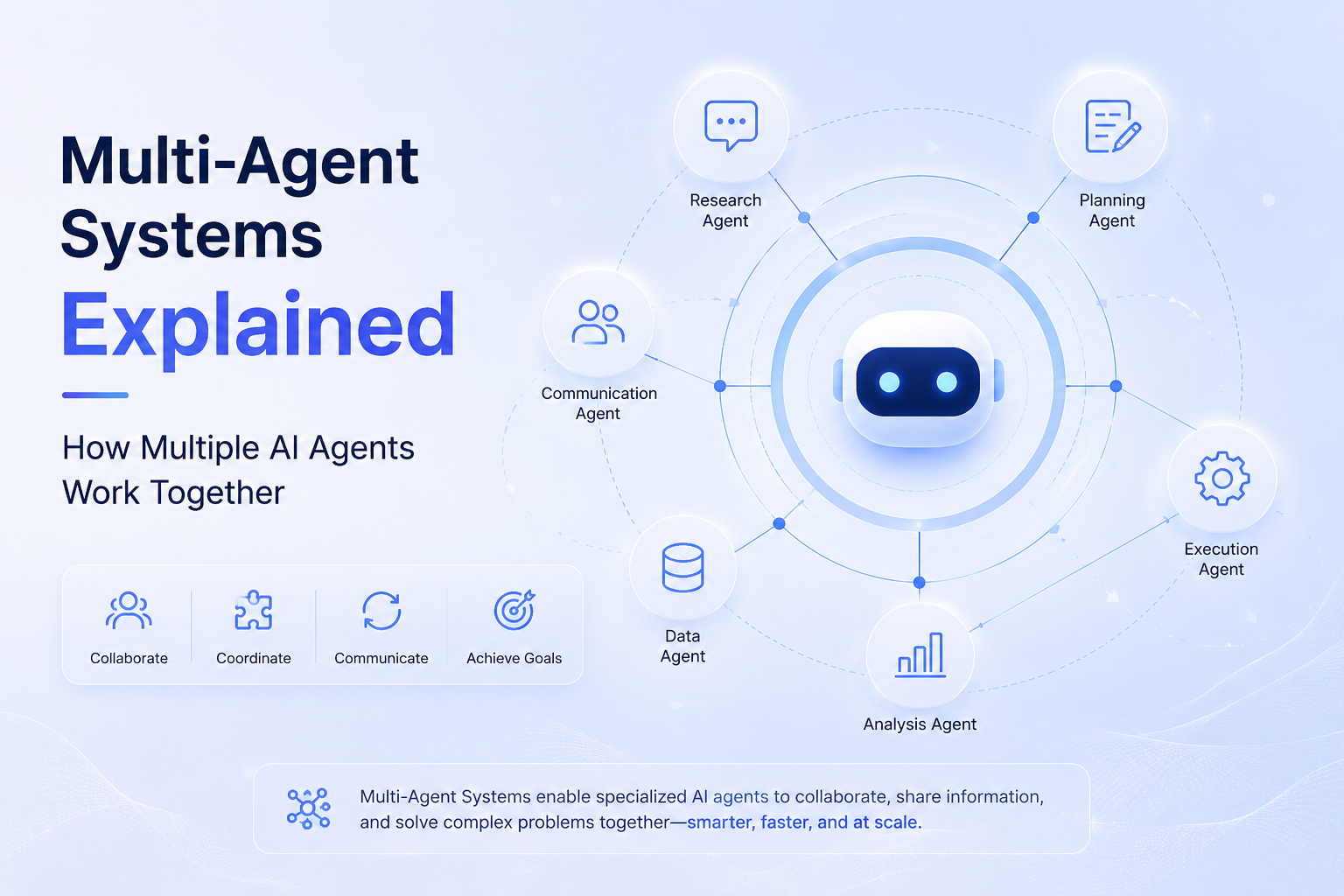
Multi-Agent Systems
Multiple specialized AI Agents collaborate to solve complex workflows.
Example:
- Research Agent
- Sales Agent
- Email Agent
- CRM Agent
working together.
---
Real-World Business Applications
AI Agents are already being used across many industries.
Customer Support
- Answer customer queries
- Resolve support tickets
- Reset passwords
- Handle refunds
---
Sales
- Qualify leads
- Schedule meetings
- Generate proposals
- Update CRM
---
Human Resources
- Screen resumes
- Schedule interviews
- Answer employee questions
---
Finance
- Invoice processing
- Expense management
- Financial reporting
---
Marketing
- Content generation
- Campaign optimization
- Social media automation
---
Benefits of AI Agents
Businesses adopt AI Agents because they provide measurable value.
Benefits include:
- 24/7 availability
- Faster customer support
- Reduced operational costs
- Improved productivity
- Better decision making
- Easy scalability
- Consistent customer experience
---
Challenges of AI Agents
Like every technology, AI Agents also have challenges.
Some common ones include:
- Data privacy
- Security
- Hallucinations
- API integration
- Monitoring
- Human oversight
Proper implementation and governance are essential for successful deployment.
---
Why AI Agents Matter in 2026
Businesses are shifting from traditional automation to intelligent automation.
Instead of replacing employees, AI Agents handle repetitive tasks so human teams can focus on creativity, strategy, and innovation.
Organizations adopting AI Agents today gain a significant competitive advantage in productivity, customer experience, and operational efficiency.
---
Final Thoughts
AI Agents represent the next generation of intelligent software.
Unlike traditional chatbots, AI Agents can reason, plan, make decisions, use external tools, and complete complex business tasks with minimal human intervention.
As AI technology continues to evolve, AI Agents will become a core part of every modern business.
Whether you're a startup or an enterprise, investing in AI Agents today means preparing your business for the future.
---
Ready to Build AI Agents?
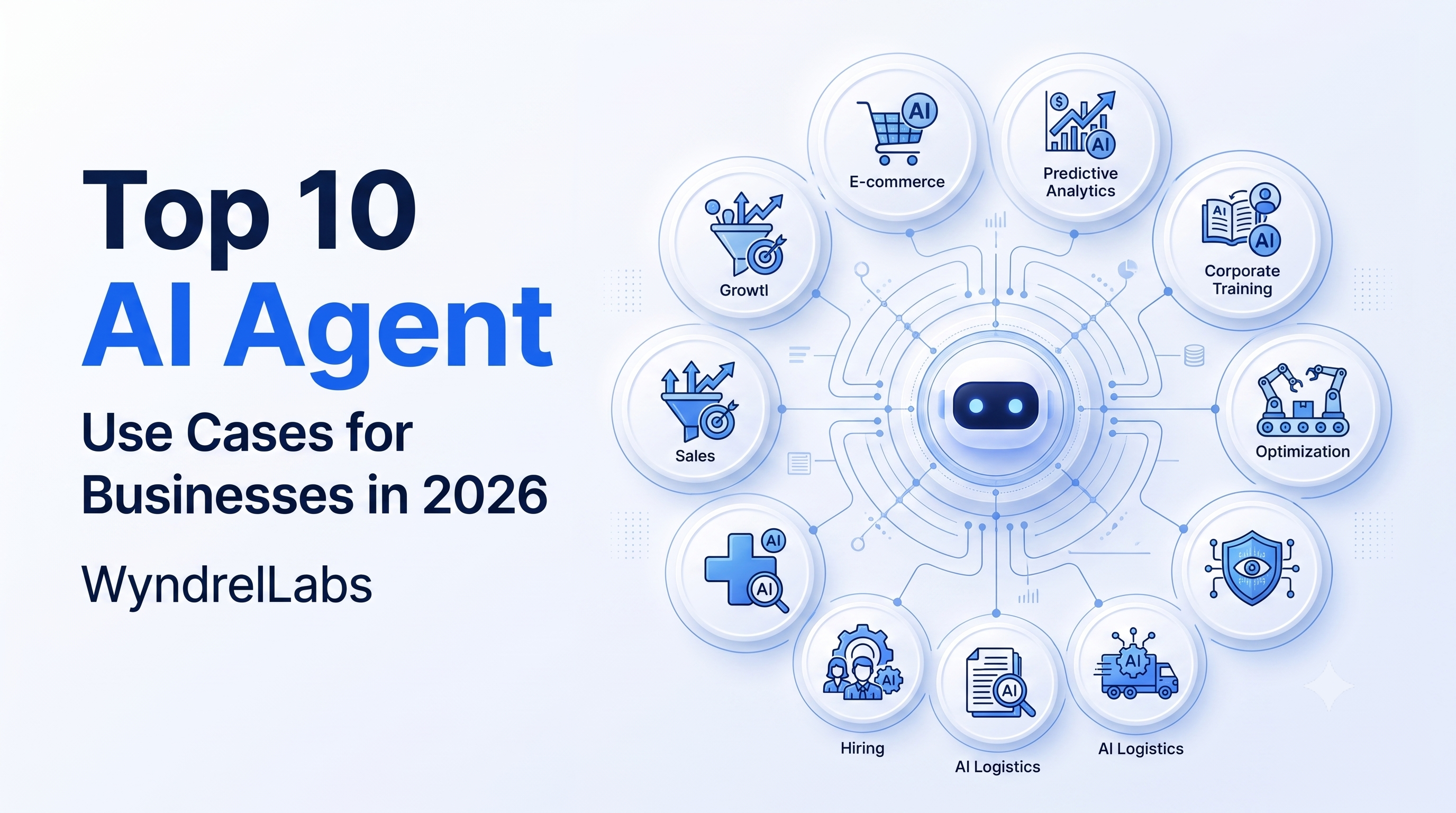
At WyndrelLabs, we design and develop custom AI Agents for businesses that automate customer support, sales, operations, HR, and internal workflows.
Whether you need a single AI assistant or a complete multi-agent ecosystem, our team can help you build scalable, secure, and production-ready AI solutions.
Book a free consultation and discover how AI Agents can transform your business.